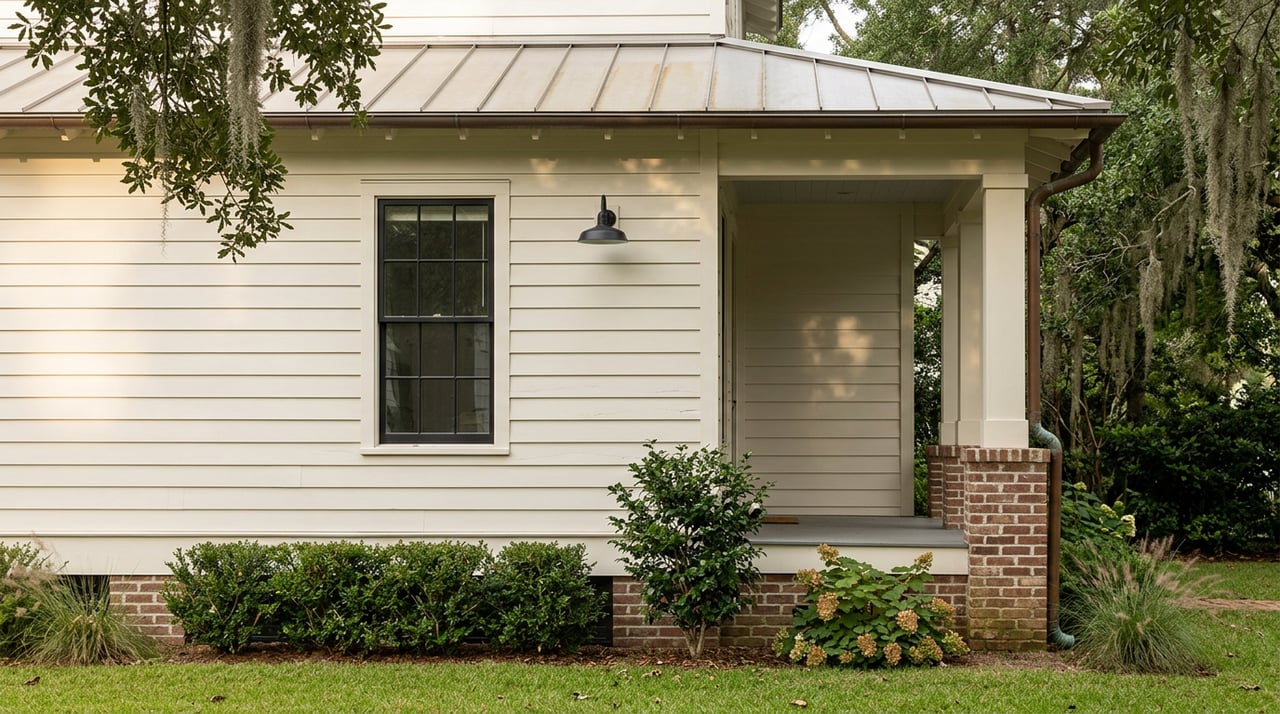
What a Certificate of Appropriateness Means for Covington Sales
August 27, 2026
August 27, 2026
In June of 2024, a resident on North Columbia Street asked the Covington Historic District Commission for permission to hang a bat house on a second-story porch. The request came in as an emergency, tied to a health issue, and the commission approved it the same meeting it was heard. That is the whole story. No drama, no denial, no six-month fight over paint chips. Just one more line item in a stack of cases that also included a parking lot expansion for a church administration building and, years earlier, amendments to a garage and patio design for a couple on North Jefferson Avenue.
I bring this up because most sellers picture the Covington Historic District Commission as an obstacle built out of taste. It isn't. Almost everything that comes before it gets approved as submitted. The actual friction for someone selling a home inside the historic core has nothing to do with whether the commission likes your shutters. It has to do with two things sellers rarely check before they list: whether their parcel sits inside the district that gives the commission its authority, and whether their timeline lines up with a meeting schedule that runs once a month.
That is the piece of this market almost nobody explains clearly, and it is worth understanding before you put a sign in the yard.
The city's own historic preservation ordinance states that the commission reviews applications for a Certificate of Appropriateness for any proposed construction, material alteration, demolition, or relocation of a building, structure, or appurtenance within the historic district. That phrase, appurtenance, is doing a lot of work. It is why the commission has, in recent years, reviewed:
None of those are controversial projects. They are the ordinary business of homeowners and business owners doing small, visible things to their properties. The point is that the definition is broad enough to catch far more than new additions or major renovations. If your pre-listing to-do list includes a fence, a new roof, exterior paint, replacement windows, or removing an old shed before photos, you may be closer to needing a Certificate of Appropriateness than you think, and the way to find out is a phone call to the city's Planning and Zoning Department at City Hall on N. Jefferson Avenue, not a guess based on how old the house looks.
Here is the part that catches even longtime residents off guard. Covington has two separate locally designated historic districts, the Covington Historic District and the North Covington Historic District, created by city ordinance. Those are the boundaries that give the commission legal authority over exterior changes.
Then there is the Division of St. John Historic District, listed on the National Register of Historic Places back in 1982, representing the historic core of the city. A National Register listing is a real distinction and it can open the door to certain tax incentives for qualifying rehabilitation work. But National Register status and local historic district designation are not the same authority, and they don't always carry the same day-to-day obligations for an exterior repaint or a new fence. If you own a home that feels historic, sits in a historic-sounding pocket of town, or shows up in a survey of historic-age resources, that alone does not tell you whether the Covington Historic District Commission has jurisdiction over your porch. The city's own zoning map does. Before you plan pre-listing work, confirm with Planning and Zoning which line your parcel actually falls inside. It is a five-minute call that can save you weeks.
Assume your home is inside the district and something on your project list needs a Certificate of Appropriateness. The next variable is the calendar. The commission meets roughly once a month, historically on a Tuesday at 4:00 p.m. in City Council Chambers, with a submission deadline that falls before each meeting date. Miss that deadline by a day and your project waits for the next month's agenda, not the next available slot.
The Star Theater case shows how this plays out even when the request itself is straightforward. The applicant came in with preliminary plans to begin the approval and building permit process on the old theater building, with the agenda explicitly noting that further approvals might be needed as construction progressed. That is not unusual. A single renovation can move through the commission in more than one pass, which means a seller trying to finish exterior work before listing photos needs to think in monthly increments, not weeks.
If you are coordinating a sale around a specific closing date, an estate settlement, or a relocation timeline, this is the number that actually matters, far more than any statistic about how fast homes in your neighborhood typically sell. A missed submission window can cost you a full month before your house is even camera-ready.
This brings me to a figure that circulates on real estate portals and tends to alarm sellers in Old Covington: an average of 873 days on market, against a 48-day national average. Read on its own, that number suggests something is badly wrong with demand in the neighborhood.
It isn't. It is an average, not a median, pulled from a relatively small pool of active listings, and averages get pulled hard by outliers. A handful of high-end or estate properties that have sat unsold for years, for reasons specific to those individual homes, can drag a small-sample average into four digits while most homes in the same area move in a fraction of that time. A homes.com snapshot dated May 2025 put the median home price in that same slice of Old Covington at $565,000, with an average sale price of $661,825, and a trailing twelve-month figure on the same page put the median sale price closer to $570,000, down about 4 percent year over year. The 873-day figure comes from that identical pool of listings. Pull back to a citywide sample of Covington's broader vintage-home category on Redfin, a much larger pool of transactions, and the median listing price drops to $406,000 with homes typically spending about 80 days on market.
Those two pictures aren't contradictory. They're measuring different things. A tight, high-value pocket like Old Covington will always have fewer transactions to average, which means a couple of stubborn listings can distort the headline number badly. The takeaway for a seller isn't that homes in the historic core sit for two and a half years. It's that the number worth tracking before you list isn't days on market at all. It's your own Certificate of Appropriateness timeline relative to your target listing date, because that's the variable you actually control.
Does my house automatically need a Certificate of Appropriateness because it's old? No. The requirement comes from sitting inside the locally designated Covington Historic District or North Covington Historic District, not from a home's age or its inclusion in a National Register survey. Confirm your parcel's status with the city's Planning and Zoning Department before assuming either way.
What if I'm only doing cosmetic work, like exterior paint? The ordinance language covers material alteration broadly. Rather than guessing which cosmetic changes count, bring your project list to Planning and Zoning early and let them tell you what triggers review.
Can I still list my home while a Certificate of Appropriateness is pending? Yes, but if buyers or their inspectors ask about unfinished exterior work, an open or upcoming CHDC case is useful information to have ready, not something to work around at the closing table.
How far in advance should I plan for exterior work before listing? Given the roughly monthly meeting cadence and the possibility that a project needs more than one pass, as the Star Theater case shows, build in at least two full meeting cycles of buffer if any exterior work needs commission review.
Selling a home inside Covington's historic core rewards the seller who plans around the calendar, not the one who assumes the commission will be the hard part. If you're weighing a sale in Old Covington, the historic downtown blocks, or anywhere near the Division of St. John core and want a realistic timeline built around your specific address, Felicity Kahn & Associates can walk the property with you and help you sequence the paperwork before the photographer shows up. Get your free home valuation and let's map out the calendar together.
Stay up to date on the latest real estate trends.


Collaborate with a team that values professionalism, growth, and a refined approach to real estate success.